Tap to Trade
De Appel Kiosk at Dappermarkt.
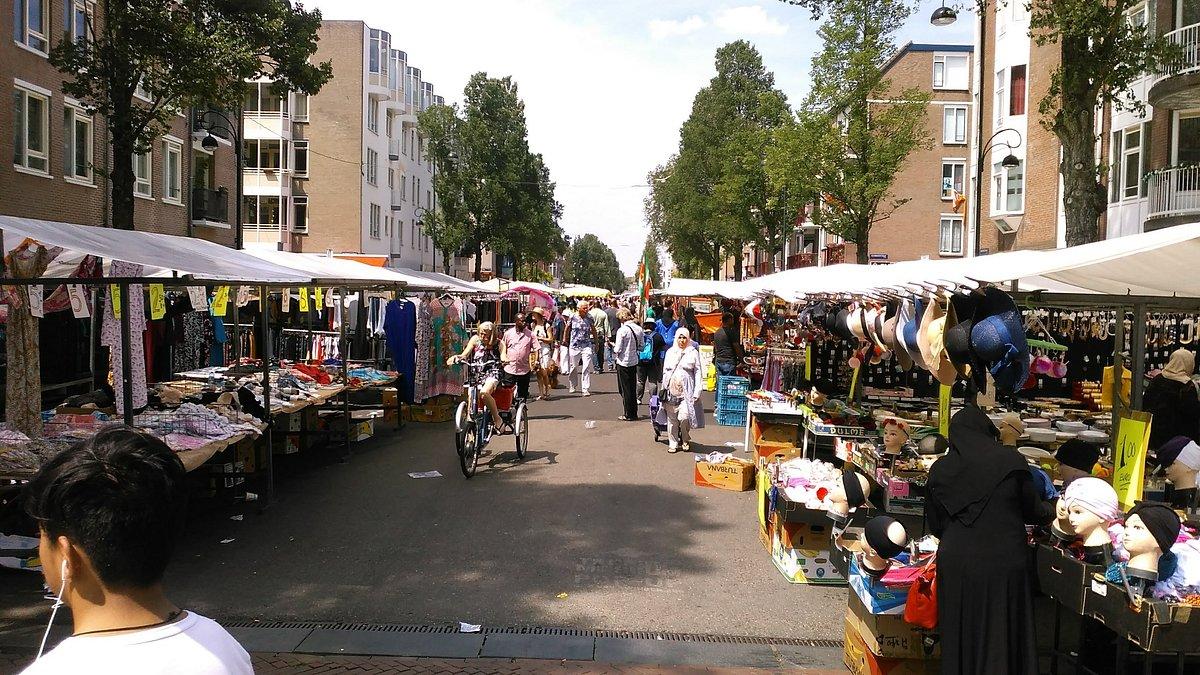
In December 2024, the De Appel Kiosk program set up at the Dappermarkt in Amsterdam East. The second edition of the kiosk was run by Espacio Estamos Bien, an Amsterdam-based art cooperative founded by Mariana Jurado Rico and Francisca Khamis Giacoman, in collaboration with Lorenzo García-Andrade.
The installation was called DOOS ¡No hacemos moneda falsa! A market stall filled with goods sent by friends and collaborators around the world, including artists based in Latin America, Japan, and Canada. Everything was available, but not for money. The exchange ran on favours, letters, wishes, and objects. Non-monetary trade in the middle of a regular market day.
Pull shoppers into a conversation about value.
The Dappermarkt isn't a gallery. People are there to buy groceries, not to engage with art. How do you pull regular market shoppers into a conversation about value without making it feel like a lecture? The interface can't be academic. It can't require explanation. It has to feel familiar before it feels strange.
Keep the ritual. Remove the money.
Everyone already knows how to pay. The card tap, the terminal beep, the receipt printing out. Those gestures are universal. They work across language, across culture. You don't need instructions. Your muscle memory handles it.
So: keep the ritual. Remove the money.
The familiar interaction becomes the entry point. People engage before they realize they're in a conversation about value.
A gutted SumUp and a thermal receipt.
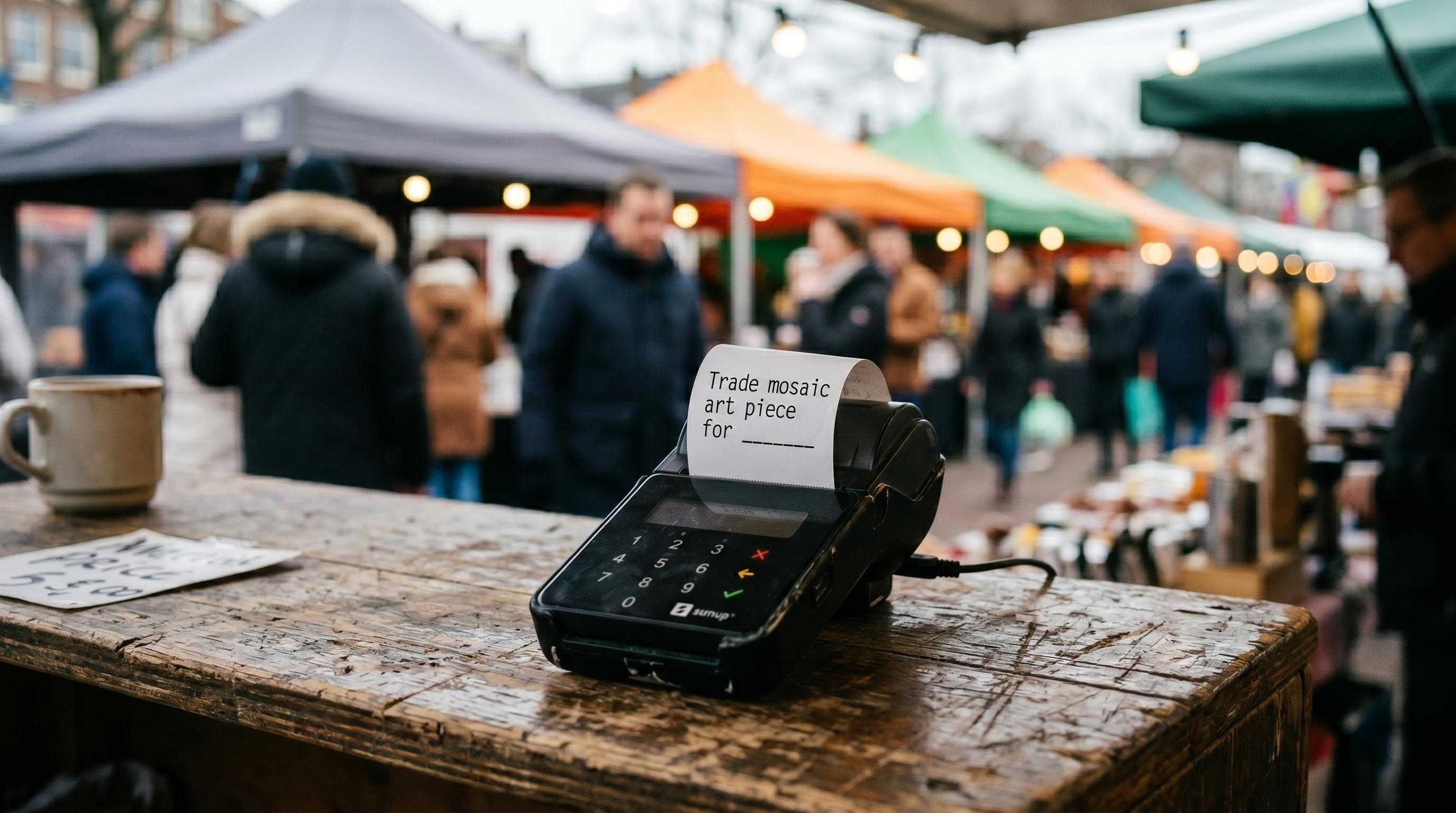
A gutted SumUp payment terminal, wired to a WhatsApp-connected receipt printer. The gesture copies how a SumUp actually works: the salesperson taps the name of the item into their phone, it appears on the terminal, the buyer taps their card.
Same flow here. Except the salesperson is texting the piece's name over WhatsApp, and the receipt that prints out doesn't say "paid". It says trade, followed by the name of the piece and a blank line.
The shopper writes their offer on the line by hand. A physical object, a service, a wish, a dream, anything. The gesture is a callback to signing your credit card receipt after a swipe.
The payment action stays the same. The tap, the beep, the receipt. Only what the receipt says is different.
They're already participating before they realize it.
You don't need to explain the concept. The object explains itself. A payment terminal on a market stall is invisible, it belongs there. People tap their card out of habit. And then the receipt asks them a question they weren't expecting.
By the time someone reads what's on the receipt, they're already participating. The conversation about what things are worth, about what you'd actually give up for something you want, starts from a gesture everyone already knows.
What people give when they're not paying.
The kiosk ran at the Dappermarkt over two Saturdays in December 2024. Expect around 150 taps across the run, 80 receipts filled in with handwritten offers, and 35 trades where the salesperson accepted the proposal.
The more interesting part is what ends up on the receipts. Physical things as expected (a home-baked tart, a pair of winter gloves), but also what people don't usually put a price on: a song written for the salesperson, a dream recounted in a voice note, a phone number left without context. The receipts read like a small census of what people are willing to give when they aren't asked to pay.