Ammar
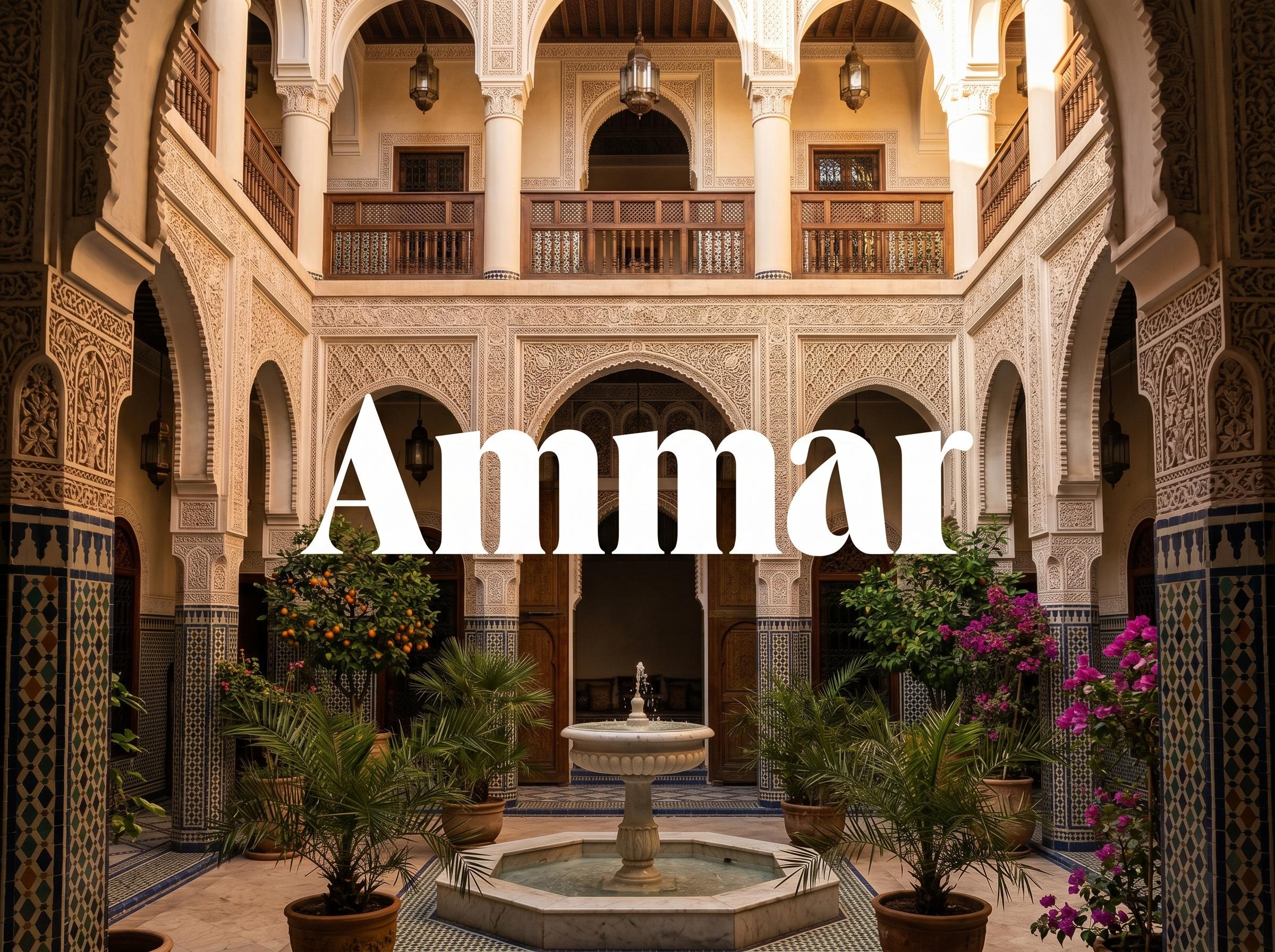
More Morocco than the mood boards.
Since the 2022 World Cup run, Moroccan aesthetics have been having a moment. European brands are pulling from it. Social media campaigns lean on it. What gets picked up, though, is narrow: muay thai shorts (a look that caught on after Moroccan fighters took over the sport), four people on a moped, oriental ornament. That's a small slice of a much bigger country.
The challenge was to tell the part that doesn't make the mood boards. And to do it as luxury, without using Europe as the reference.
What's normal in Morocco is luxury in Europe.
A lot of what's normal in Morocco reads as luxury in Europe. Long afternoons at the table. Food cooked slowly, from scratch. The same hospitality, leisure, and quality that make Italy and Spain feel luxurious are all sitting there in Morocco. They just aren't framed that way.
The parallels with European country clubs are everywhere. Showing up, staying late, building a whole social life around a place you keep coming back to. Nobody has written that version of Morocco down.
A country club between two borders.
The way older Moroccan men socialise, the tea, the chess, the long afternoons arguing about nothing, already feels like a club. I formalised it. Gave it a name and a location.
Ammar is a country club somewhere between the Moroccan-Algerian border and the filming site of Casablanca (1942). It doesn't exist. But it has rules.
The whole project sits on a tension. Country club culture gets celebrated in Europe as heritage luxury. The same culture, framed as Moroccan, doesn't get celebrated that way. Ammar holds both at once.
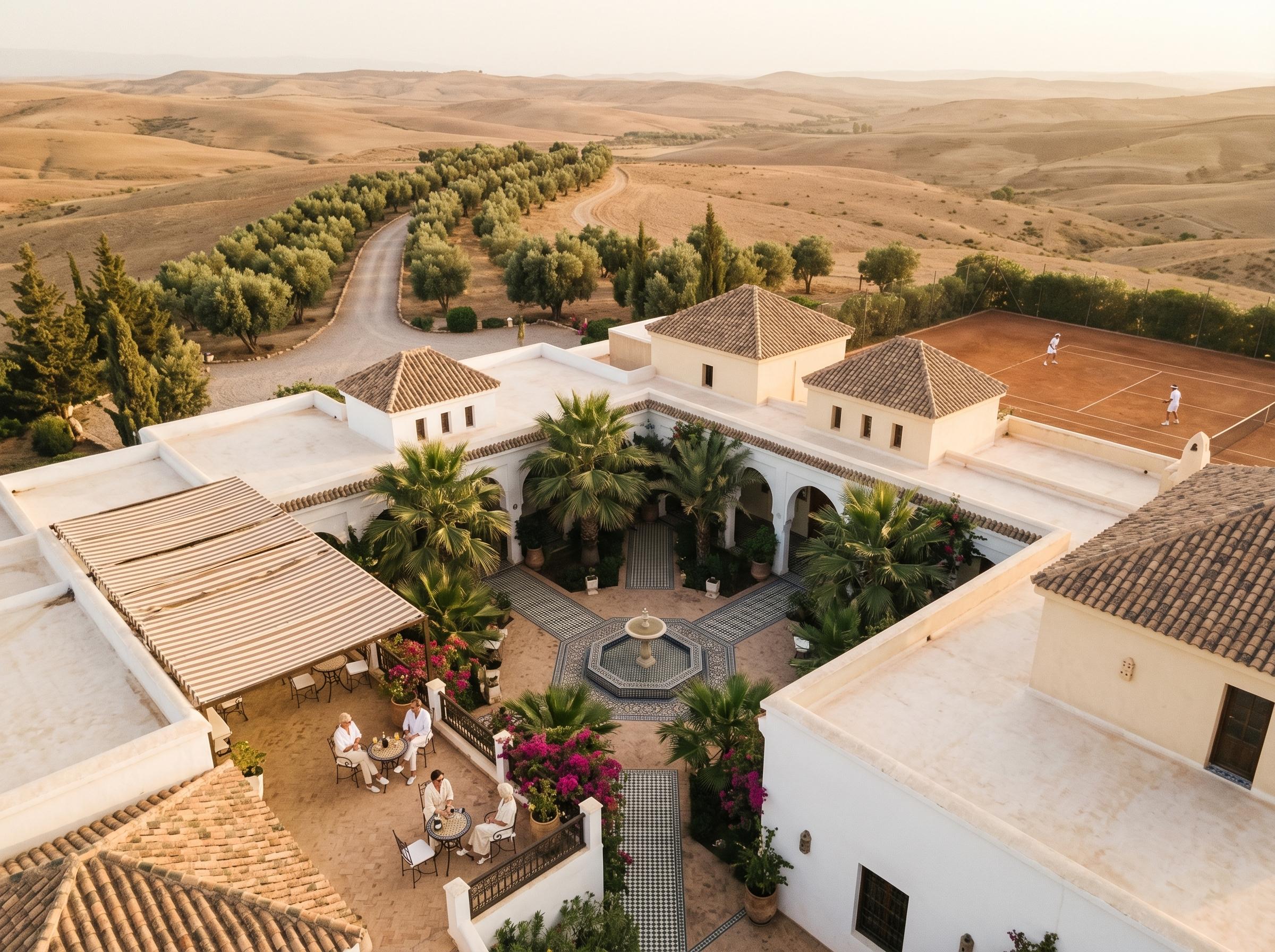
A very serious club secretary.
I tried a few different tones before landing on the one that worked. The version that stuck was a club secretary who takes their job very seriously. Formal language applied to absurd situations.
Every post is written as a letter to the members. "Dear members of The Ammar Club" opens them. "Yours in renewed service," "Yours checking the soles as well as the soul," "Yours with a sharp eye out for misconduct," closes them. Instagram captions formatted as internal club correspondence. The format itself is half the joke, and it's played straight enough that it takes a beat to register.
A few moves repeat underneath it.
The formal register continues, but an aside lets the reader in. "The observant member knows that the rules do not apply on our grounds." The joke never gets announced. You either catch it or you don't, and the people who do stick around.
When a Moroccan civil servant takes hours to stamp a paper, it's proof that the Global South is dysfunctional. When a country club takes a week to process a locker request, it's tradition. Same procedural friction, completely different story. Ammar runs on that gap. Board meetings run "unusually long." A scuba suit gift requires "a lengthy internal discussion on appropriateness." Moving locker requests online "has temporarily unsettled our administrative team, and applicants should expect a modest backlog while confidence is restored." After enough of those, you forget the club isn't real.
Details land because they're too strange to invent. The prize money from the chess tournament goes toward new slippers for the wudhu room. The winner is "a French national residing in Paris, who is known to use his carte nationale as his primary form of identification, even when circumstances strongly suggest otherwise." Si Youssef hangs retired chessboards on his office wall. Too specific to be fabricated. Too absurd to be real. That tension is what holds the whole project together.
A few other posts, same rules:
A member drove from Luxembourg to Morocco and took three weeks instead of three days. The club held a dinner in his honor. Dresscode: "roadtrip chique."
The club ski trip to Ifrane was cancelled because the trainer sprained his wrist playing rami. Out of solidarity, the whole trip was called off.
A chess game on the terrace was abandoned mid-move when two members heard Hicham El Guerrouj won his second gold medal. The board hasn't been touched since.
Dear members of The Ammar Club,
The Ammar Club, situated somewhere between the Moroccan-Algerian border and the filming-site of Casablanca (1942), has a new management. After an unusually long first board meeting, the new owners (with its predecessors blessing) have asked the following message to be shared with its members:
"The until now closed off Ammar Club will open its doors to the public for the first time in 750 years. The application process will be communicated in due time. We're looking forward to see what interesting new members we will attract."
Even though the message mentions "opening the club up to the public" we find it necessary to mention that there are limits to our definition of said public; for example, shorts above the knee will be strictly denied entry to the club at all times.
Yours in renewed service,
Ammar Club Management
Slim Aarons in Morocco.
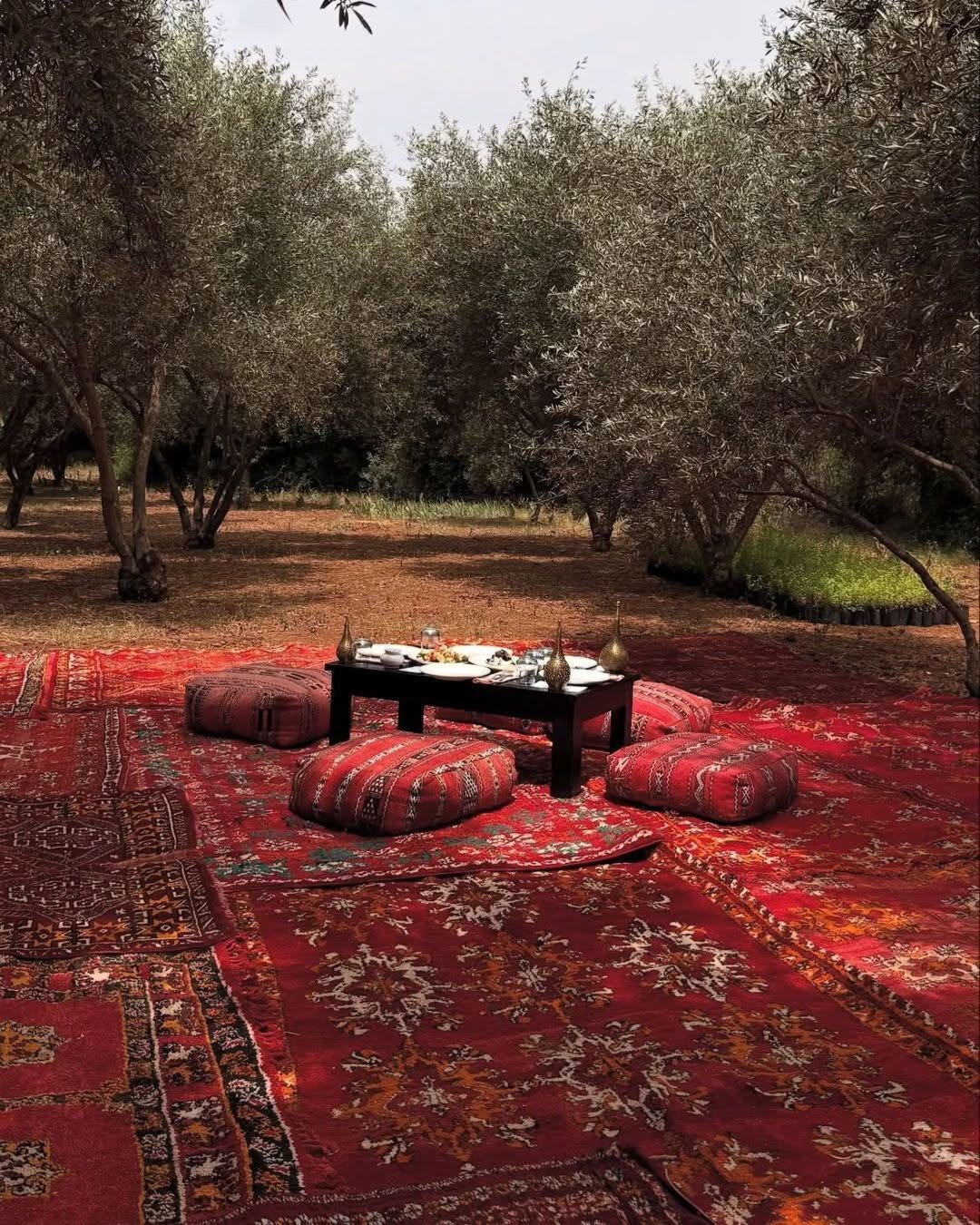
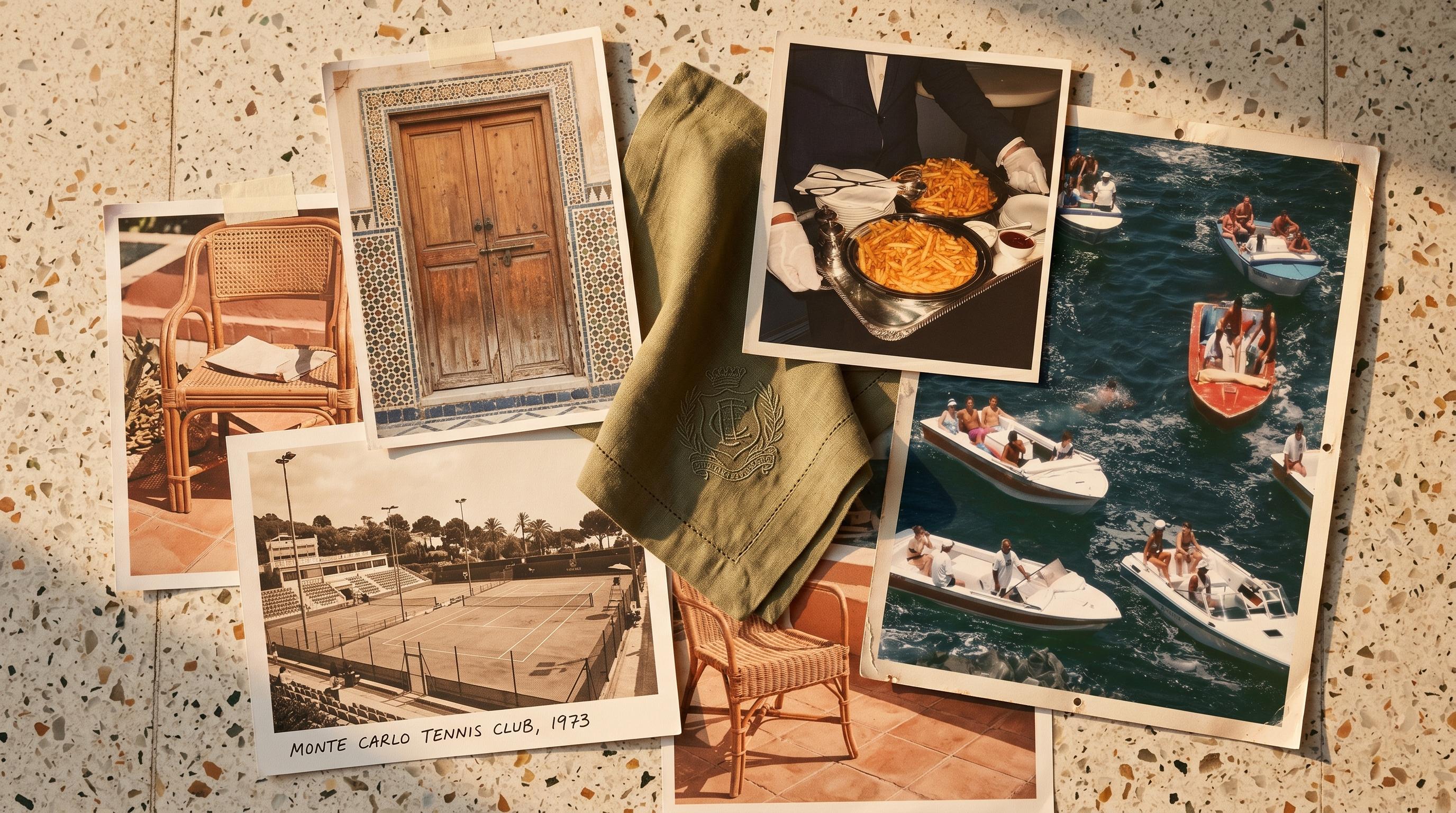
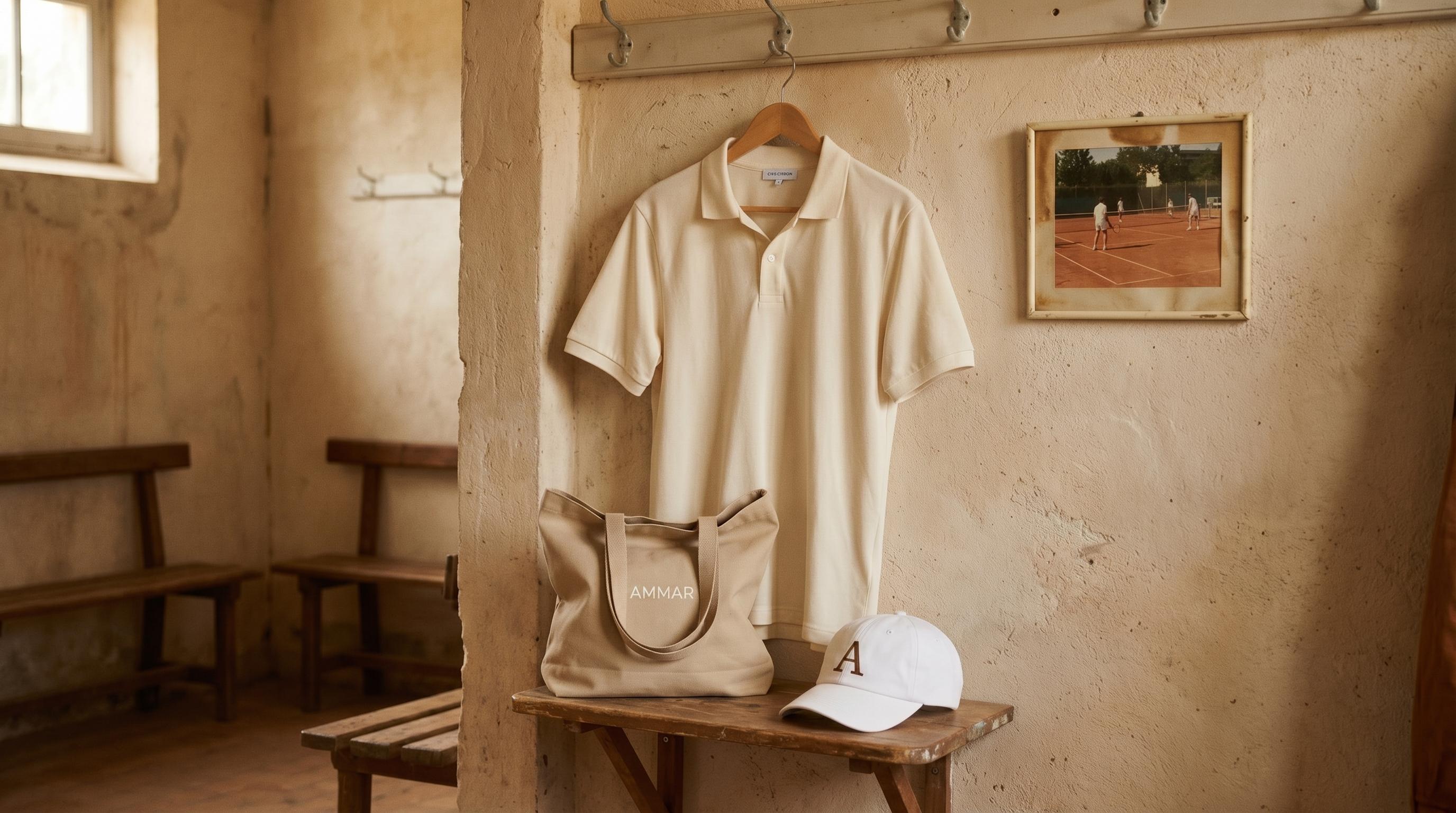
The moodboard pulls from Slim Aarons, 1970s Mediterranean leisure photography, and Moroccan domestic architecture. Warm film tones, sun-bleached surfaces, linen and terra cotta. The references are European old money, tennis and boats and terraces, but the setting is North African. Moroccan country club culture isn't documented the way French Riviera club culture is, which left room to build something that borrows from both.
I started with modern Moroccan interiors, but they looked too polished. Like a boutique hotel Instagram. The Slim Aarons reference gave it texture that felt less curated.
Not a polo. A members' uniform.
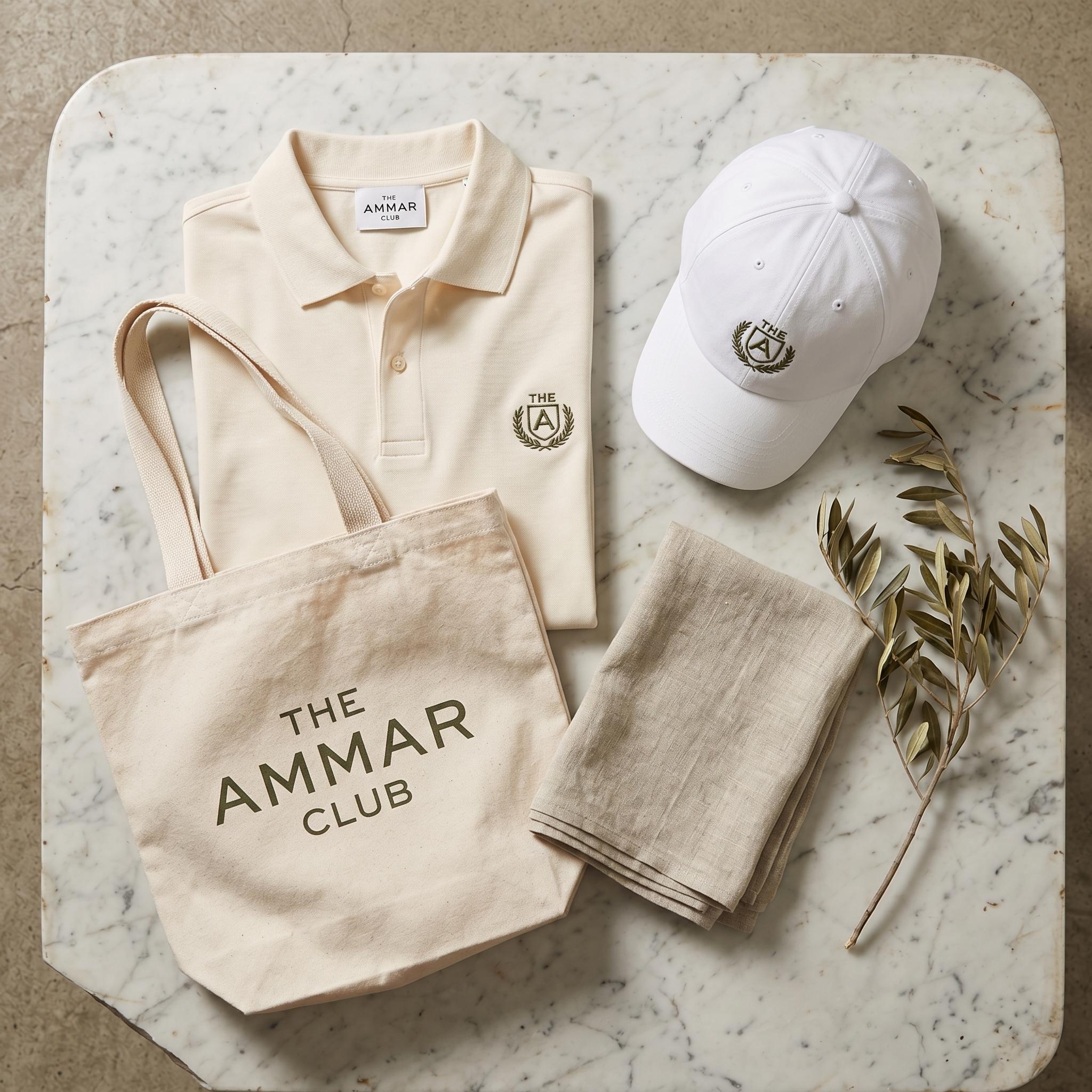
The clothing follows the same logic as the voice. Polo shirts, caps, tote bags, linen. Generic country club items. A polo isn't marketed as a polo. It's introduced as the new members' uniform, or as the shirt the club wore during a specific outing.
Counterfeit vendors are the tastemakers.
No budget. Wanting impact.
Moroccans sit at the apex of streetwear fashion and have for a long time. Their taste shapes what ends up mattering, and a lot of that taste gets curated on holiday by the counterfeit vendors in the souks. What those vendors stock signals what's relevant. If a brand appears on their rails, it's entered the conversation.
In the European fashion system, counterfeit vendors sit at the bottom of the chain. In Morocco, they're the tastemakers. Hit the vendors and you hit European streetwear at the source.
Ammar tees next to Dior and Casablanca.
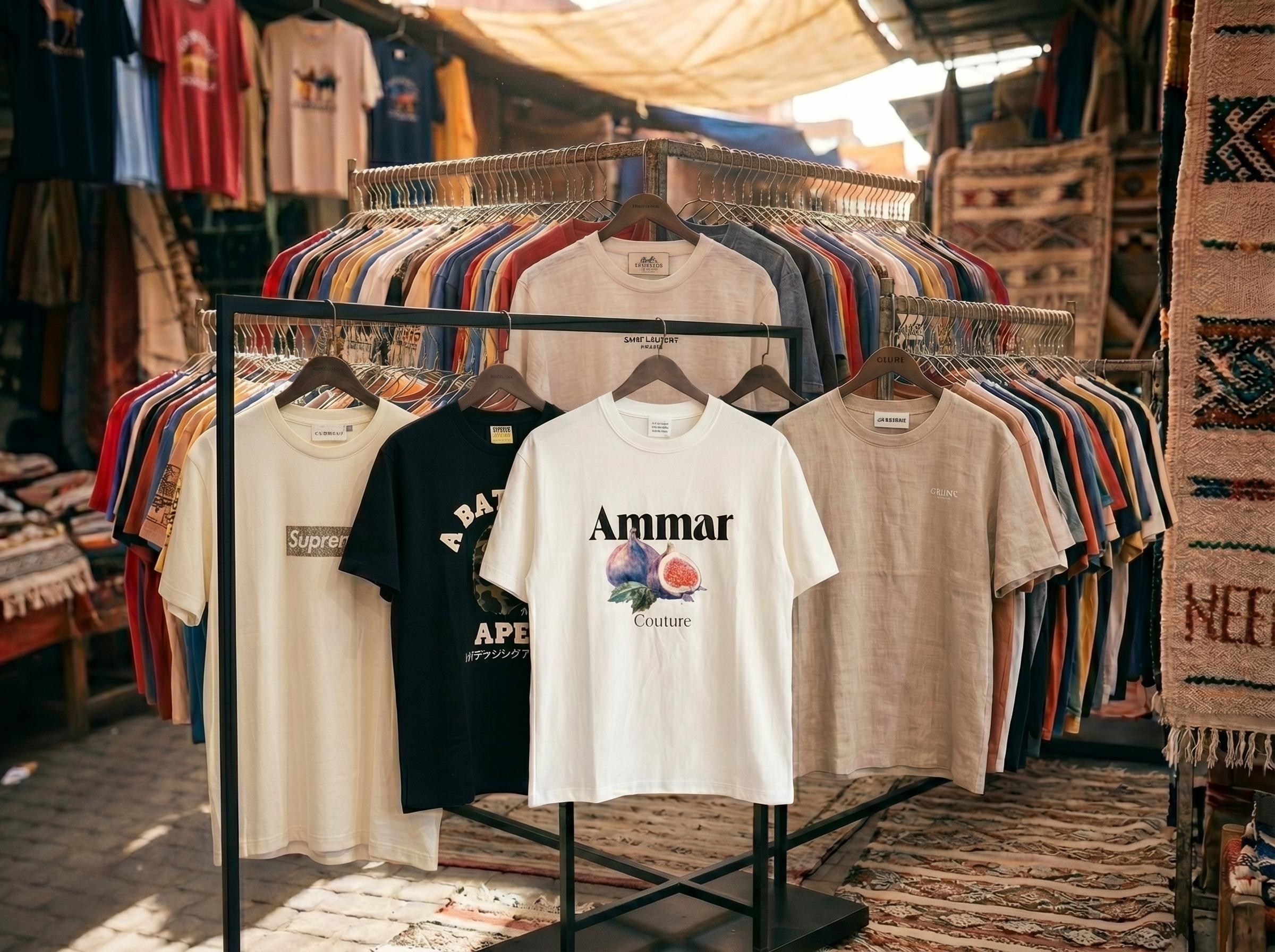
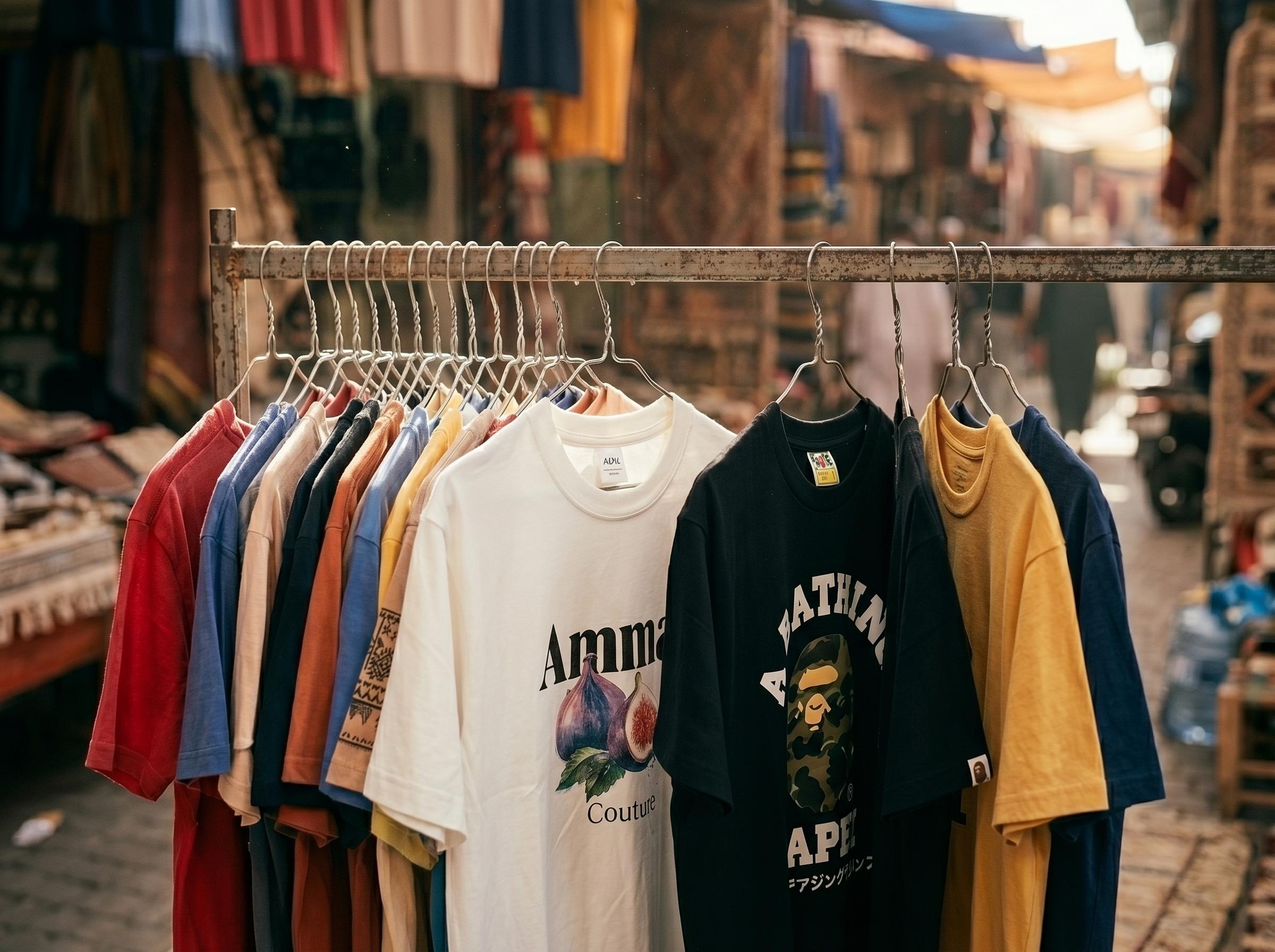
Produce cheap tees, deliberately basic, market-grade quality, and place them with vendors in Moroccan markets. Ammar hanging next to Dior and Casablanca counterfeits. Bulk blank tees at market vendor prices cost almost nothing. Millions of visitors pass through these markets every summer.
The shopper walks through, sees a brand they half-recognise from Instagram next to the brands they already know. That proximity is the positioning.
Sold out. No ads.
The Instagram (@figatherammar) has been running since 2023.
The first clothing run sold out through Instagram alone. No paid promotion. Every sale came from someone who followed the story first and bought the merch second.
Eben Badu from The New Originals recognised the account and invited Ammar to have its own booth at a festival he was organising. Beyond that, not much has happened yet.
[PLACEHOLDER: what's next — the market-stall campaign rollout, future clothing runs, any collaborations, any events.]