Nike x Sports Edits
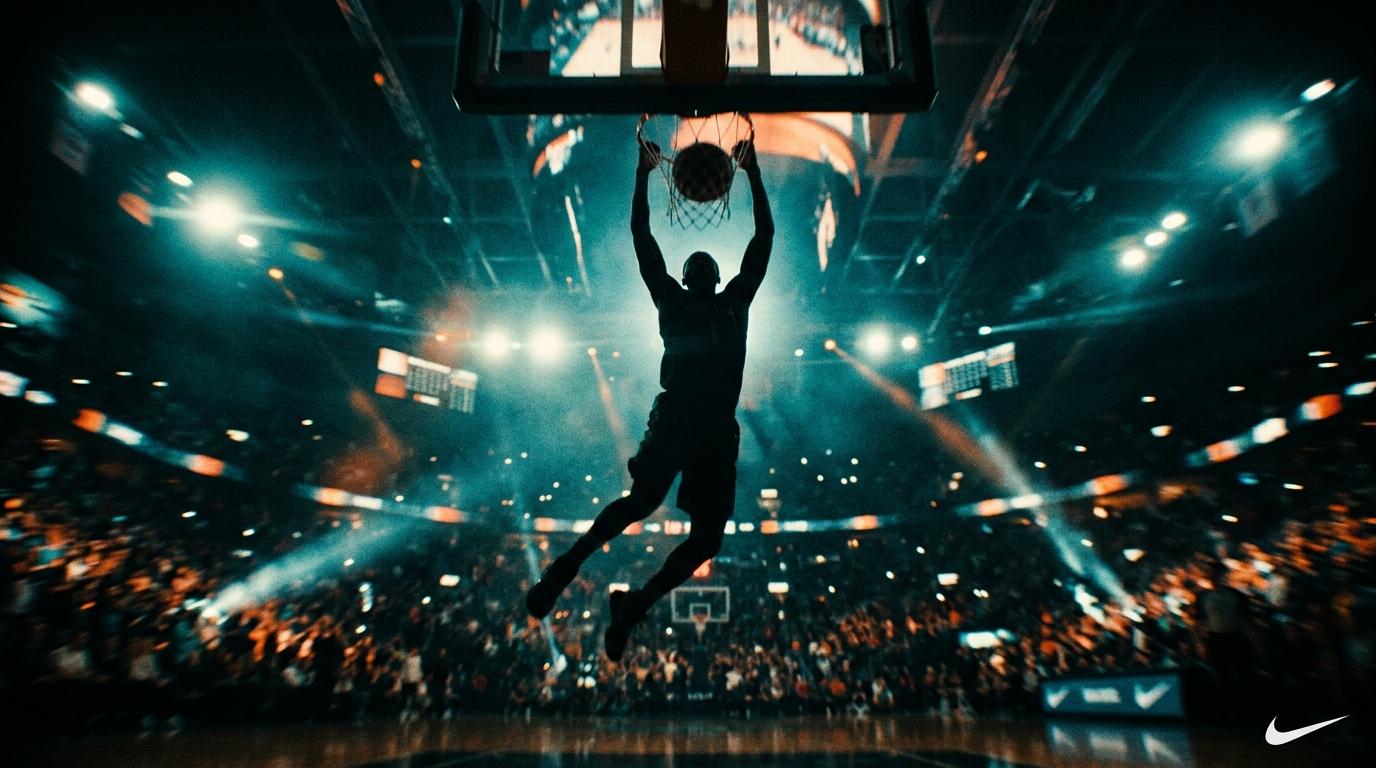
Rethink how Nike shows up on TikTok.
Nike's TikTok content follows the same format as their other channels. Vertical ads with a Shop Now button. Nike's main football account has 326,000 followers and most posts land in the low thousands of likes. That's advertising reformatted for a new screen size.
I wanted to find something else.
Sports edits are a 5-billion-view subculture.
Researching TikTok's sports content, I kept hitting a subculture of fan-made videos called sports edits. Short clips under a minute. Athlete highlights cut with cinematic transitions and trending audio. The format came out of anime and K-pop editing communities before it moved to sports. The hashtag #nbaedits alone has over 5 billion views.
The editors are mostly anonymous. Teenagers and college students using handles. One of the few with a public identity is Jordy (@ndgo.jordy), a college-aged Californian with 650,000 followers. His Draymond Green video reached 20 million views. Record labels and athletes DM him for features.
The community has its own formats and conventions. One popular move starts with an unrelated clip, someone at a wedding, a talk show interview, and cuts into the sports edit the moment the body language matches an athlete's movement. A well-known example pairs someone catching a bouquet with Odell Beckham Jr.'s diving one-handed catch.
Editors work with screen-recorded clips.
Watermarking is a skill in itself. Editors composite their name onto the back of a player's jersey or paint it into a billboard in the shot. Reposting without credit is widespread; a stolen edit often gets captioned "this might be the best edit I've ever made," a running joke about claiming someone else's work.
The bigger limit is footage. Most editors work with screen-recorded material. They spend hours looking for clean clips. What they can produce is capped by what they can find online.
Lionsgate did this already. It worked.
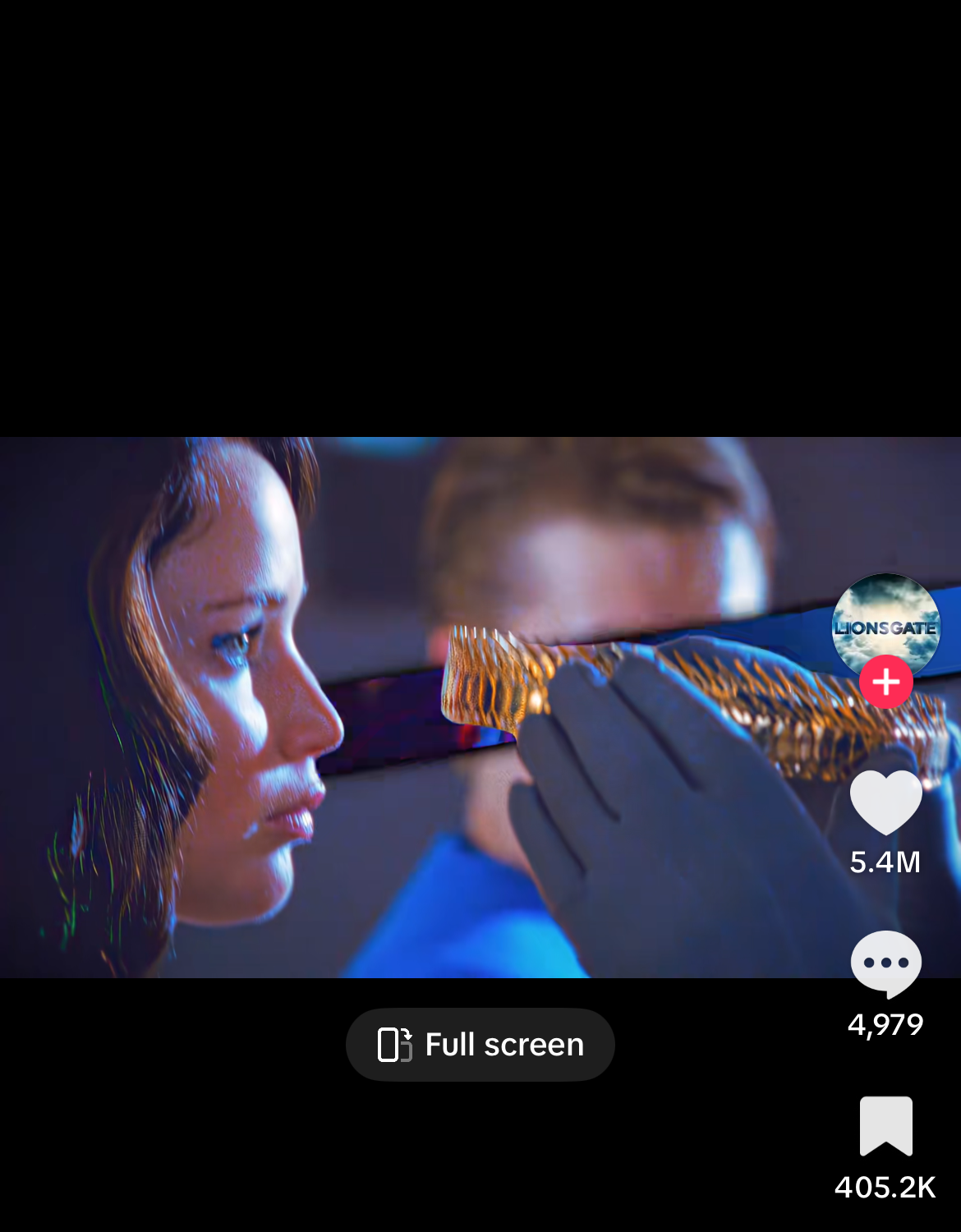
Lionsgate is the clearest reference point. They brought in a fan editor to create Hunger Games content for their official TikTok. The result: 5.4 million likes and 405,000 bookmarks.
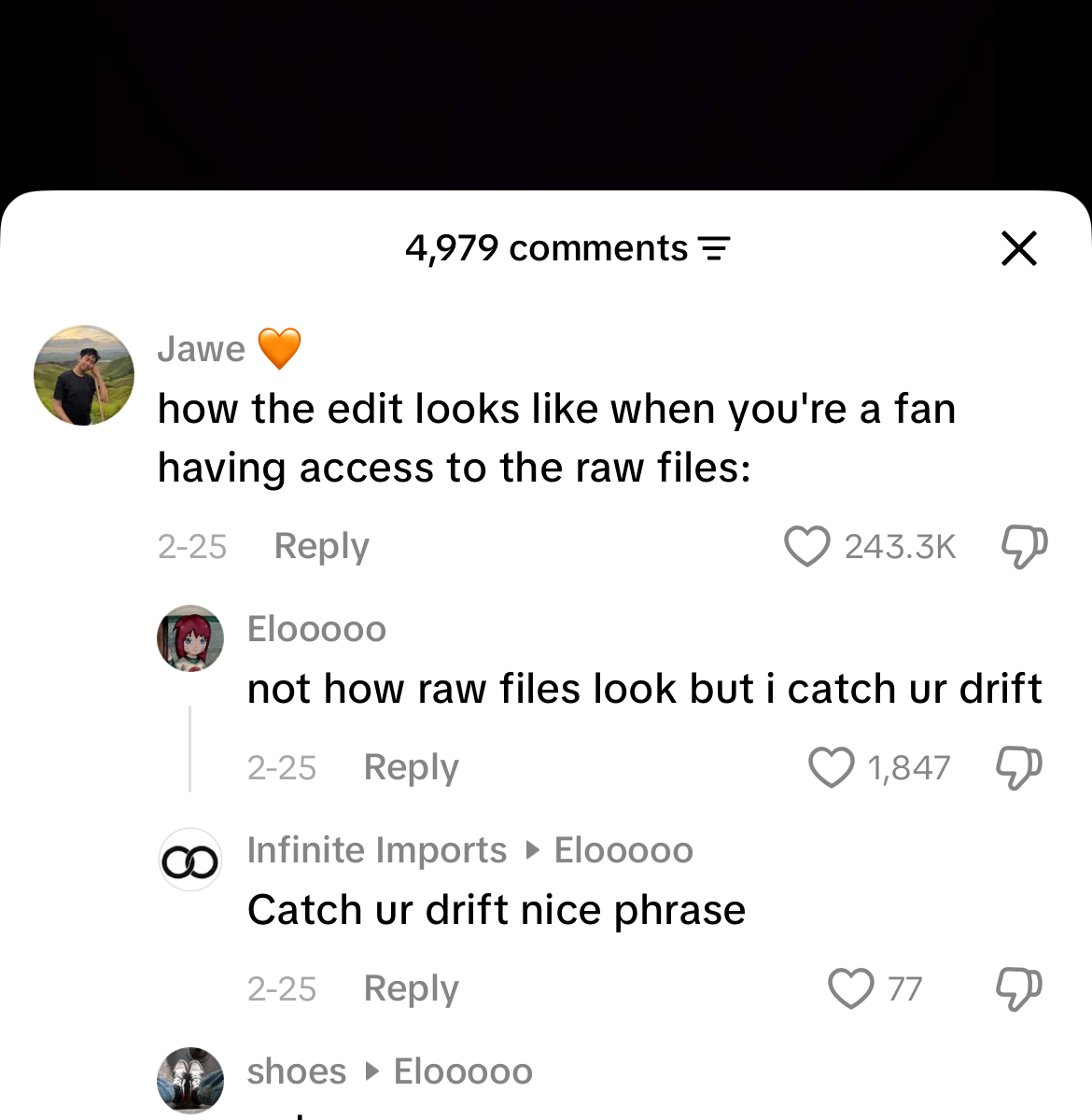
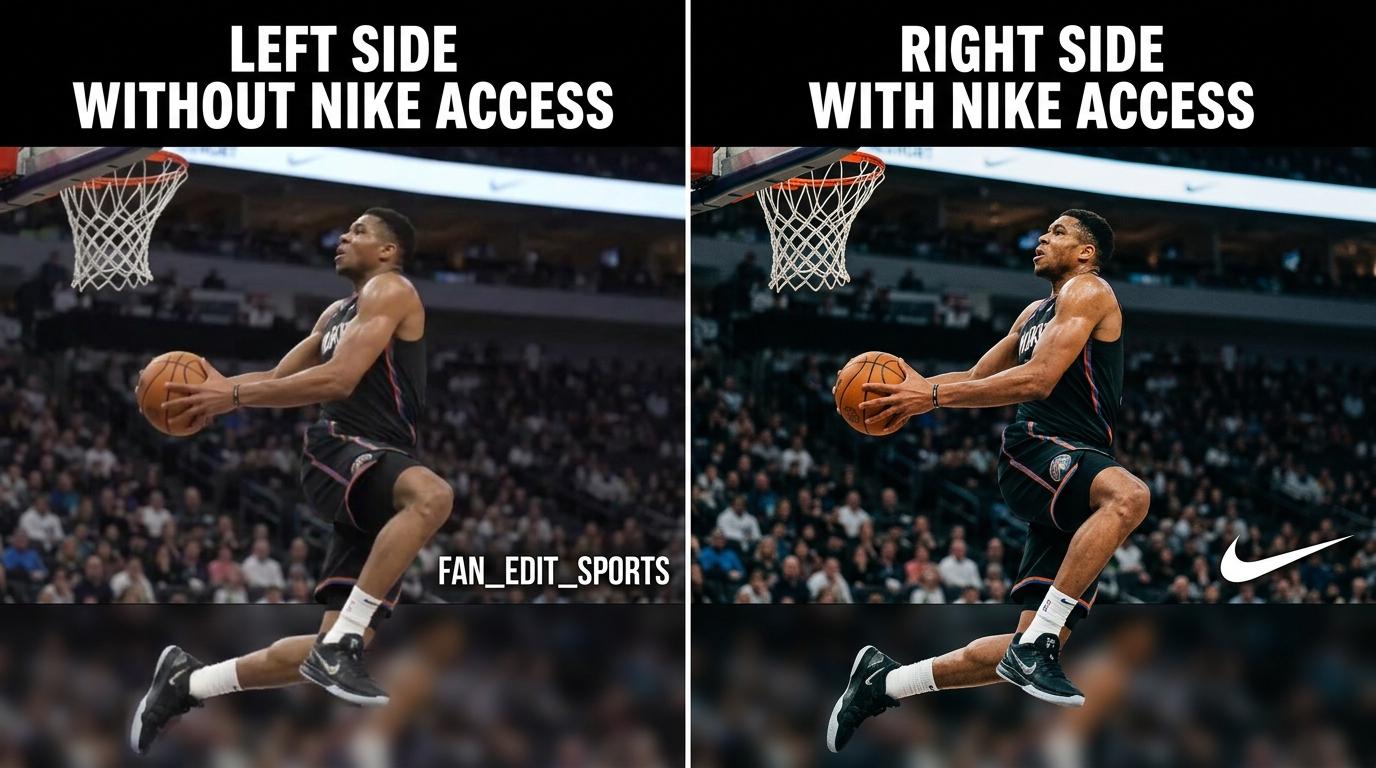
The top comment, with 243,000 likes, reads: "how the edit looks like when you're a fan having access to the raw files."
Their account manager contacted about 250 editors and built a working roster of 15. A Creed fan edit generated 195 million views. That week, viewership of the 2015 film increased 29% on Amazon Prime. Their brief to editors: "We want you to create what you're already doing. We just want to work together."
A studio editor on Reddit commented: "I kept getting asked to cut spots like these fan cam edits, and every time I wondered why they didn't just hire these people."
Nike signs athletes. Nike signs musicians. Nike has never signed an editor.
Sign editors like you sign athletes.
I looked at three approaches.
Sponsorship: paying editors to include the swoosh. This is functionally influencer marketing.
A contest: best Nike edit wins a prize. This tends to attract people interested in the prize rather than the format.
The third: model the relationship on how Nike already works with athletes. Athletes aren't sponsored in the traditional sense. They're signed. They get tools, access, a long-term relationship. I applied the same structure to editors.
I also set a production constraint. The program needs to run without production crews or studios. The content already exists. What's missing is better source material and a formal relationship.
Raw files as the access token.
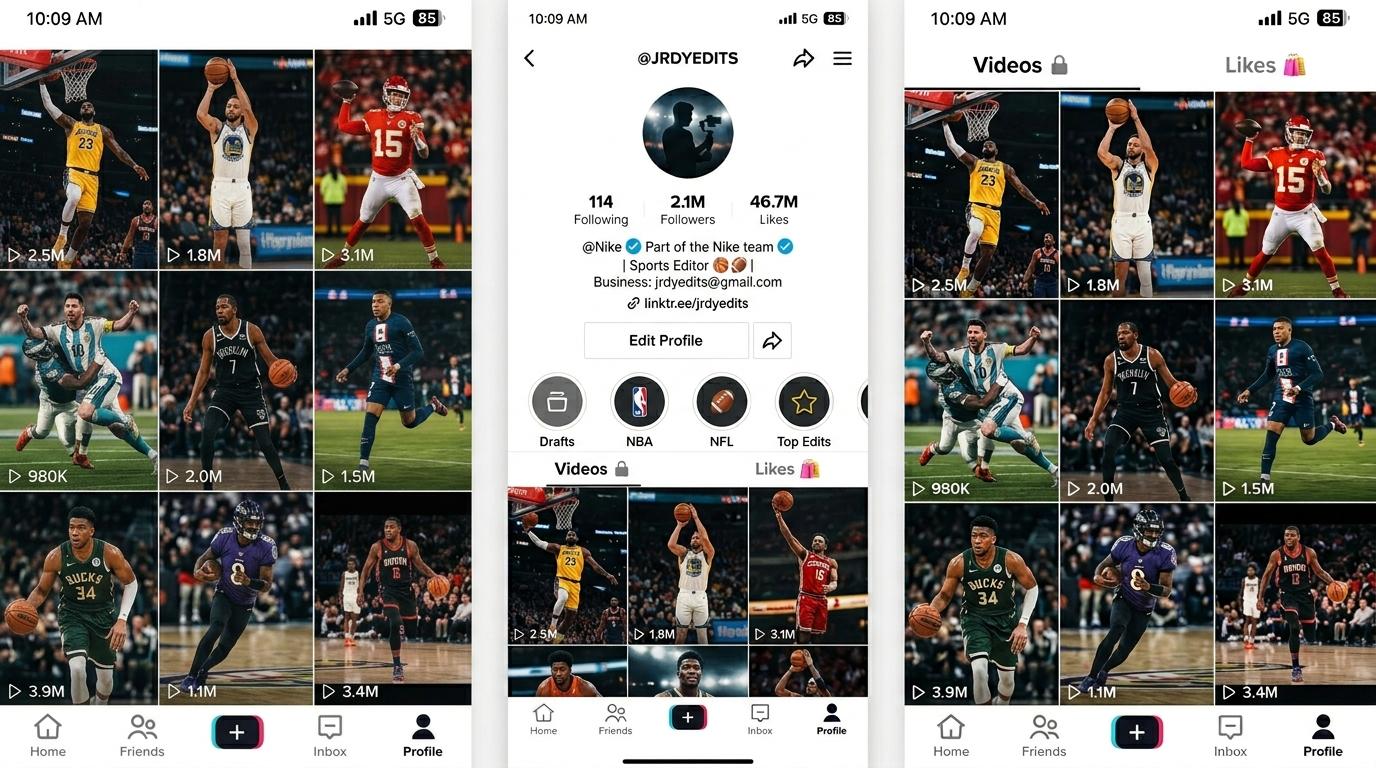
Signed editors get access to Nike's video archives. Raw footage, unreleased angles, behind-the-scenes material. They add "Part of the Nike team" to their bio.
Archive access solves the footage-quality problem directly. The Lionsgate example showed it: audiences notice instantly when an editor has real files.
Ready-made and raw assets.
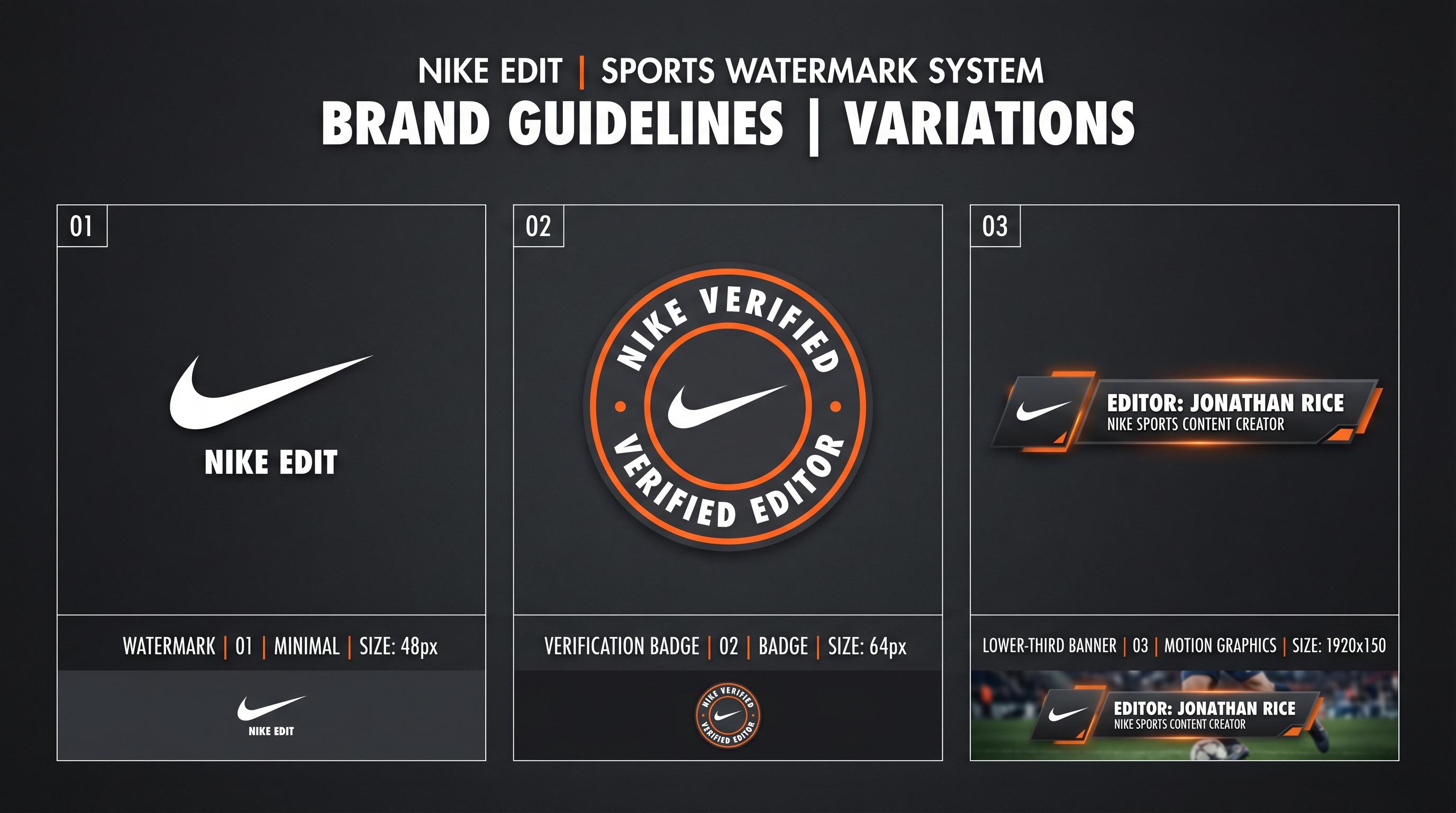
The kit splits into ready-made and raw.
Ready-made: swoosh lockups sized for corner placement, a verification badge for profiles, a lower-third banner with the editor's name.
Raw: high-resolution swoosh files on transparency, vectors at every weight, the wordmark broken into individual letters, color profiles per season. Brand guidelines come with it, what editors can use freely and what requires approval.
The point is to support how editors already work. They already composite their own logos into frames. Providing Nike's assets in raw form, with rules, extends that behaviour.
Modeled on how a club welcomes a player.
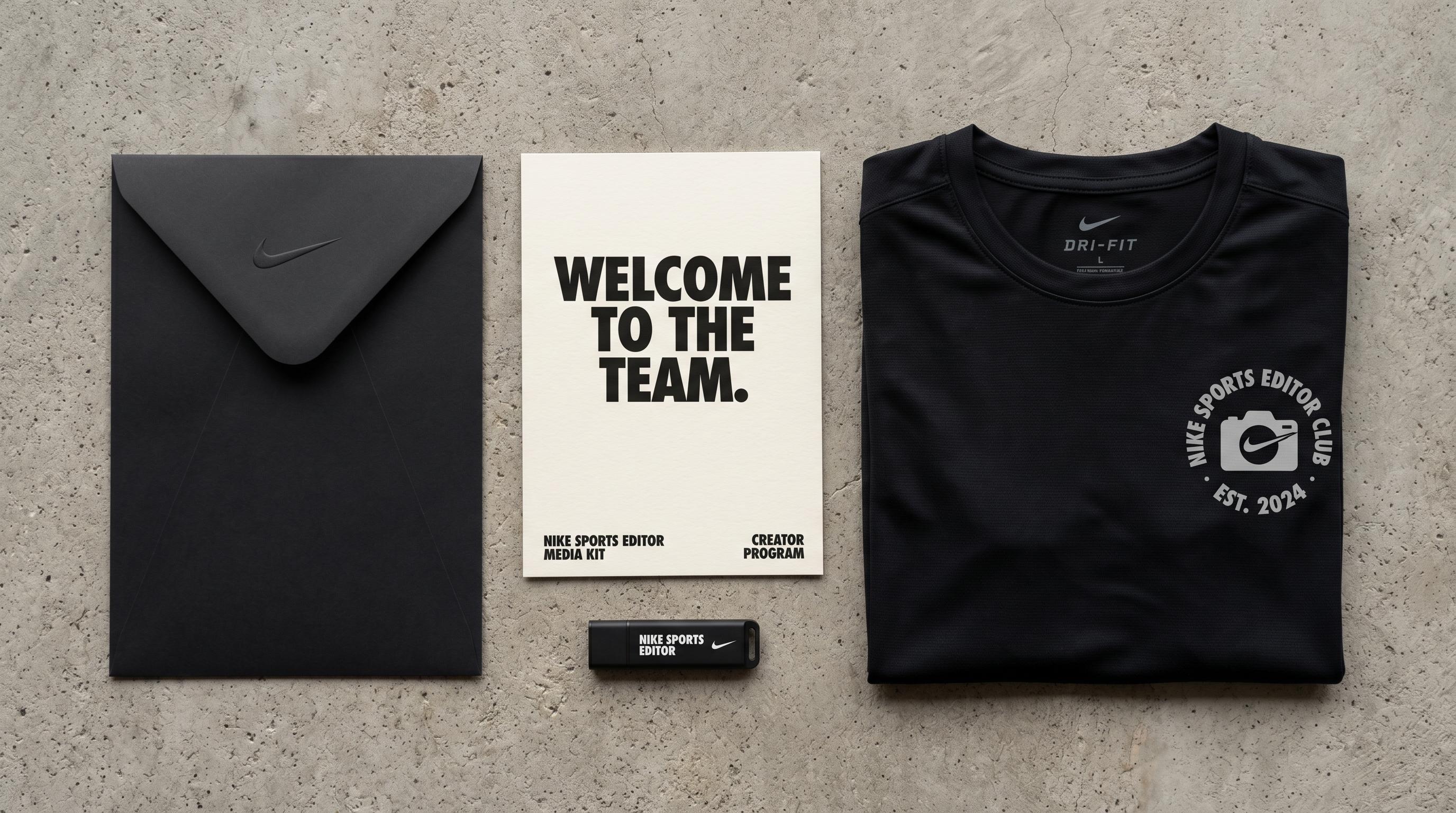
Signed editors get a physical box, modelled on how a football club welcomes a transfer.
Inside: a Nike Dri-FIT with the editor's handle printed on the back, the way a squad number would be. A card referencing the jersey-swap handshake photo that closes every transfer announcement. A USB loaded with archive footage, packaged in a boot bag. A welcome letter formatted as a contract announcement. A lanyard styled as a training ground access pass, with the editor's name and squad number.
The references are specific to sports culture. Transfer announcements, squad numbers, signing day reveals. These are formats the editors already work with daily. The signing kit speaks their language back to them.
"I would drop everything."
I shared the program with two TikTok sports editors. Both identified archive access as the most valuable part. They currently spend hours sourcing clean clips. One said he would "drop everything" for official Nike footage. The watermark toolkit also resonated, stolen edits are a recurring problem and a Nike-branded watermark adds a layer of protection.
I also spoke with a friend working in social media marketing at a sportswear brand. She noted that the cost structure is straightforward to pitch internally. She also pointed out that once an editor has a formal relationship with Nike, competing brands can't simply offer a higher rate to pull them away.
A launch that runs like a transfer window.
If Nike ships this, it runs on football's own calendar. Signings announced during transfer windows. Edit drops aligned with kit launches and match weeks. A "Part of the Nike team" bio line that gets treated by fans the same way a Champions League qualification does.
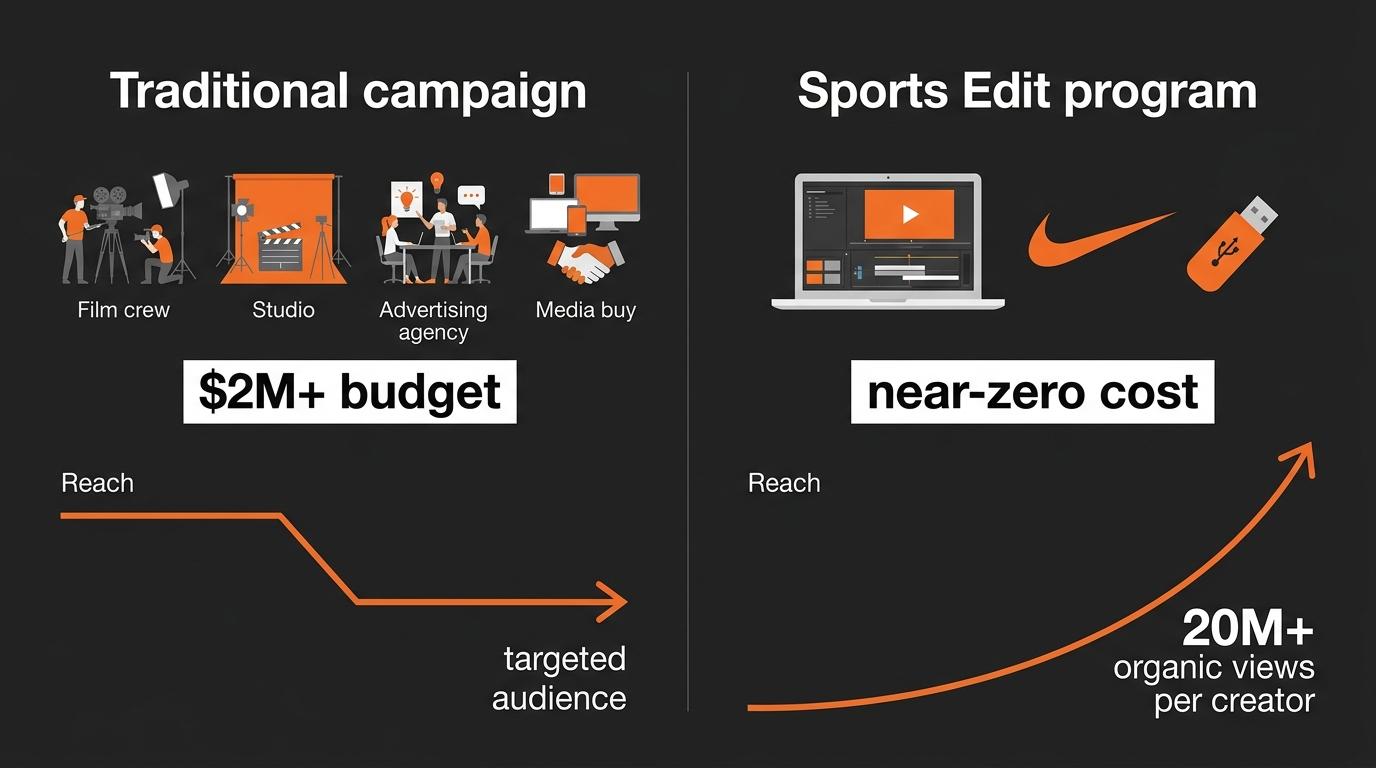
Cost per editor sits below what Nike already pays for a single influencer campaign, and the editors deliver the content themselves, in formats their audiences already watch.