Ford Everland
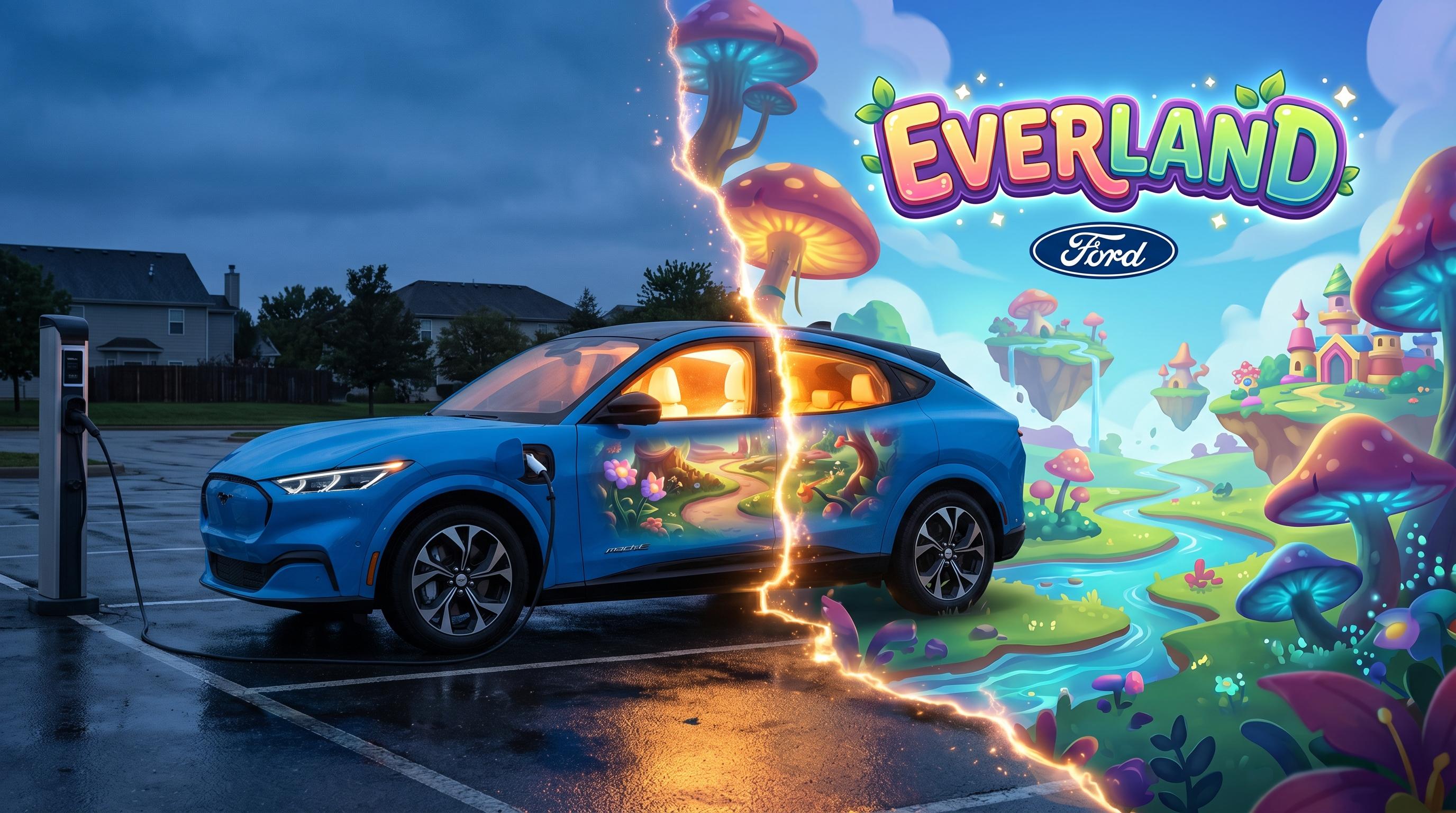
Make 30 minutes of EV charging feel like a reward.
Ford came to TU Delft with a question. The Mustang Mach-E has a 15.5" touchscreen, parking sensors, a numpad on the B-pillar, and a frunk. All of it sits idle while the car charges. What could make that waiting time actually pleasant for families who can't charge at home?
I worked on this as individual concept designer within a team of six. The team handled the research brief and ergonomics report together. Everything from the reframe onward — the vision, the game concepts, the prototype — is mine.
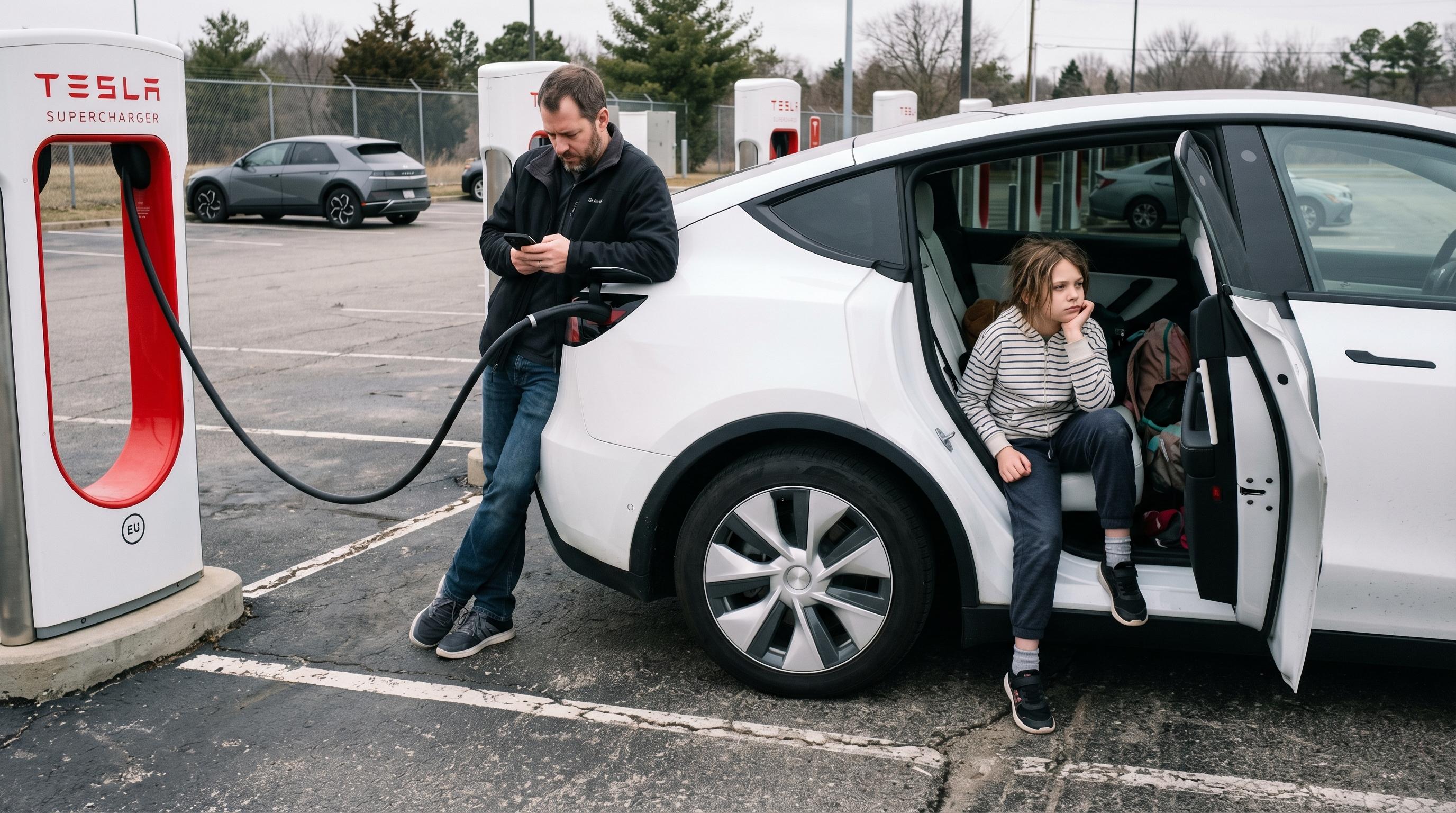
The team's first instinct was to treat children as a safety problem. Keep them contained. Keep them quiet. I didn't like that framing.
I interviewed ten children between 8 and 11 who had experienced long car trips. None of them described driving as boring. They described it as an adventure. They already play "I spy," backseat bingo, counting games. These games all revolve around paying attention to your surroundings, which is linked to increased mindfulness (Hanley et al., 2017).
Children aren't a burden during charging. They have different strengths.
From deconstruction to design.
I used the ViP method to map where our most useful research sat. The ergonomics report on charging interactions was basically past context and interaction data. I followed that thread, using the team's scope as the design statement.
Two connected loops emerged: keep children engaged and safe by gamifying their surroundings. Raise parents' mindfulness by pulling them into shared car games with their kids.
The analogy I kept coming back to: like finding the closet to Narnia. The car becomes a gateway. Step inside during charging, and a different world opens up. Everland is that world — projected through the cabin, turning the mundane act of waiting into something the kid actually looks forward to.
Reverse escape room on the B-pillar.
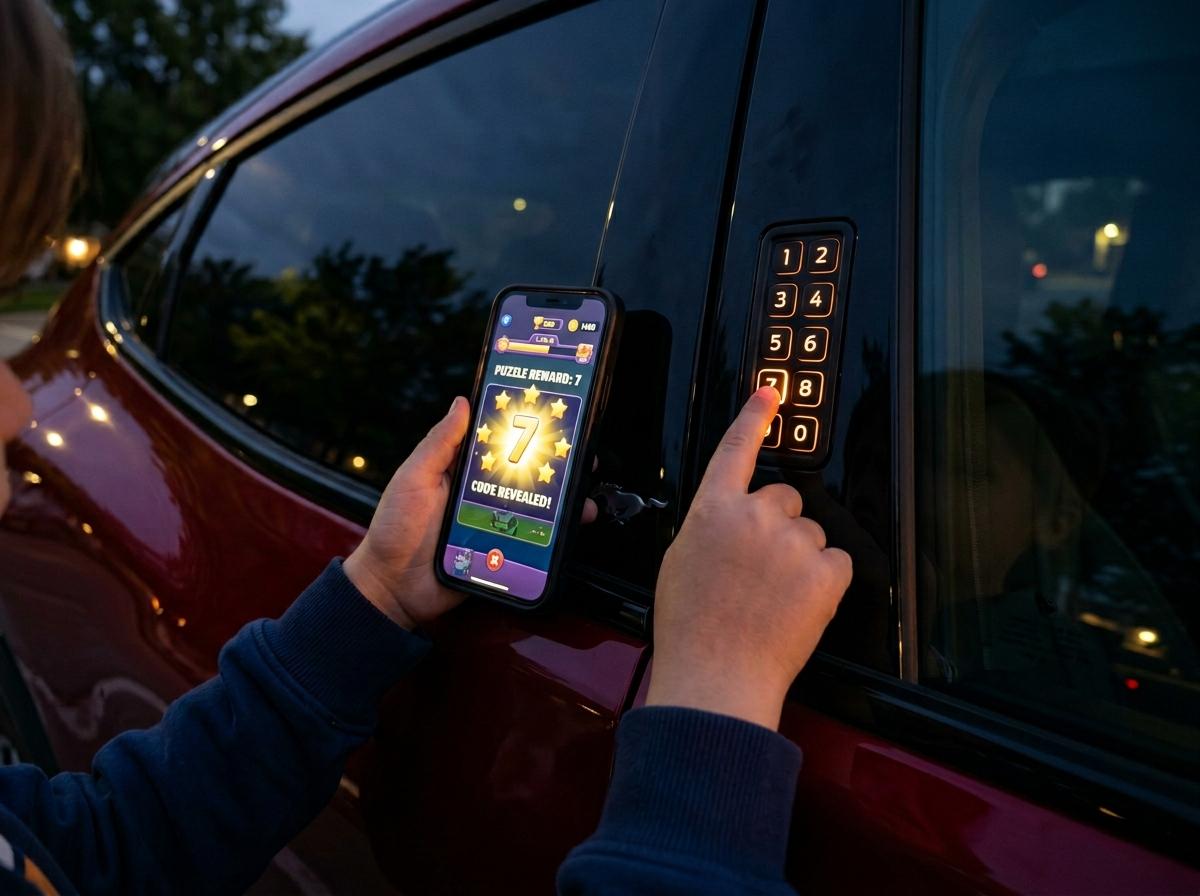
The Mach-E has a numpad on the B-pillar that's normally used to unlock the car. In Everland, it becomes a puzzle input. The child plays minigames on their phone — each completed game reveals a digit. Once they've earned all four numbers, they enter the code on the numpad to "unlock" the car.
The car is the lock. The phone is the key. The games are how you earn the right to open it.
Marco Polo with parking sensors.
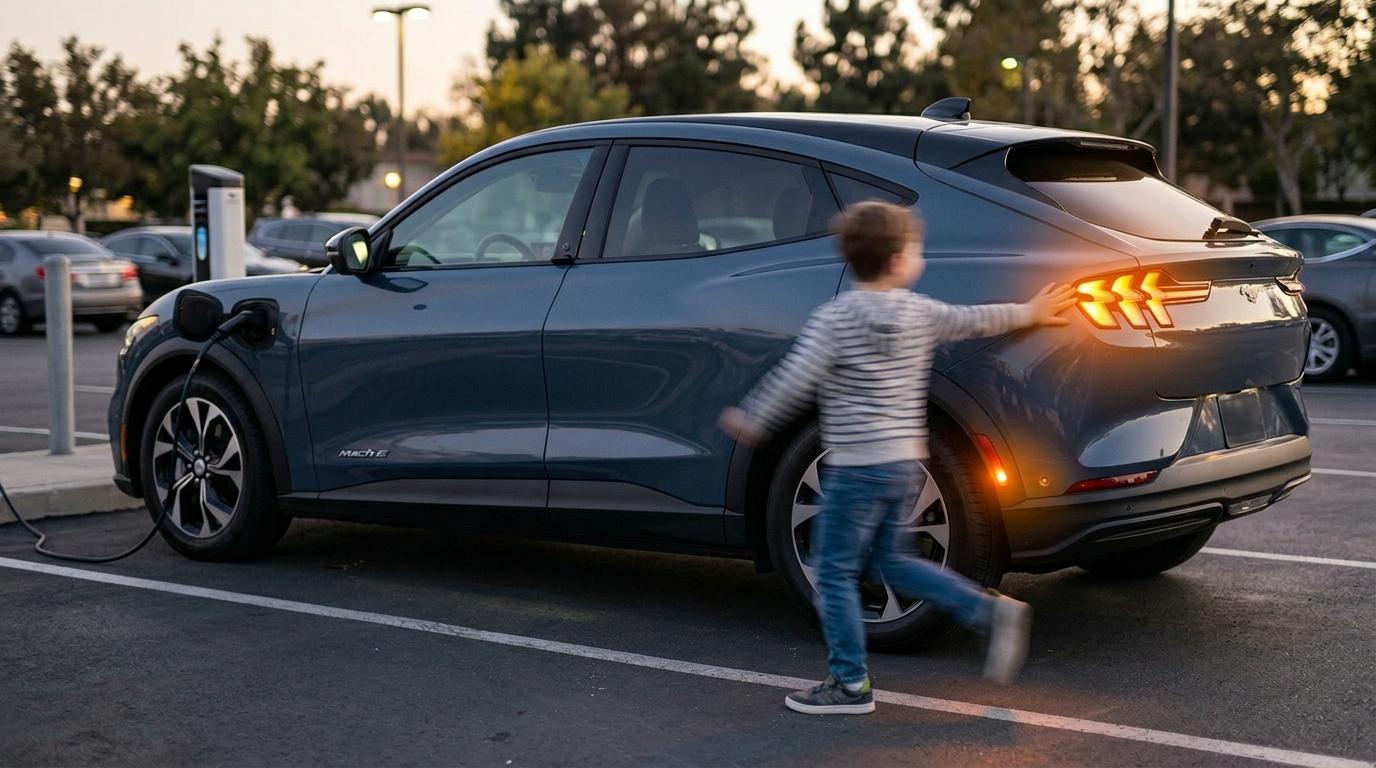
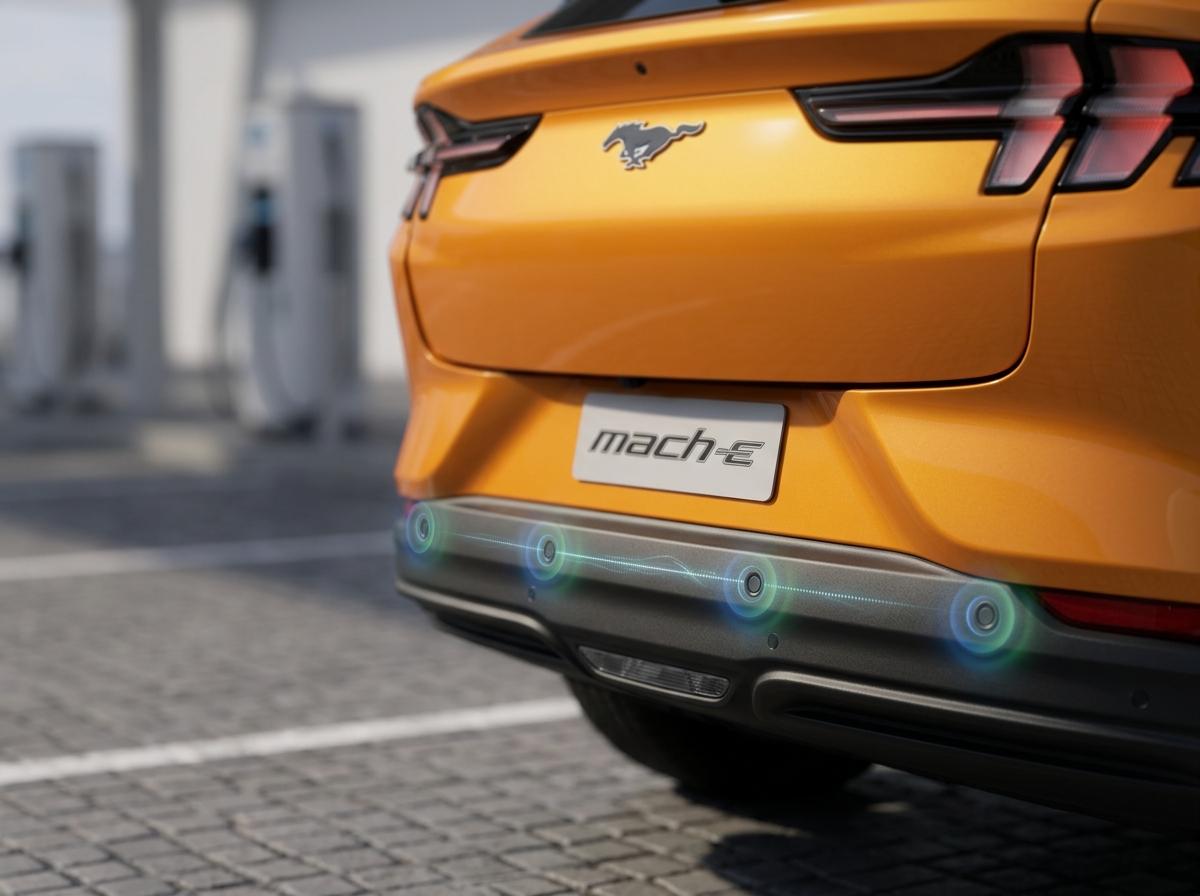
This one uses the car's parking sensors as a real-world game mechanic. The car blinks one of its turn signals. The child has to chase it — run to that side of the car and activate the parking sensor by standing close enough. When the sensor detects them, a new blinker fires on a different side. It's tag, but your opponent is a car.
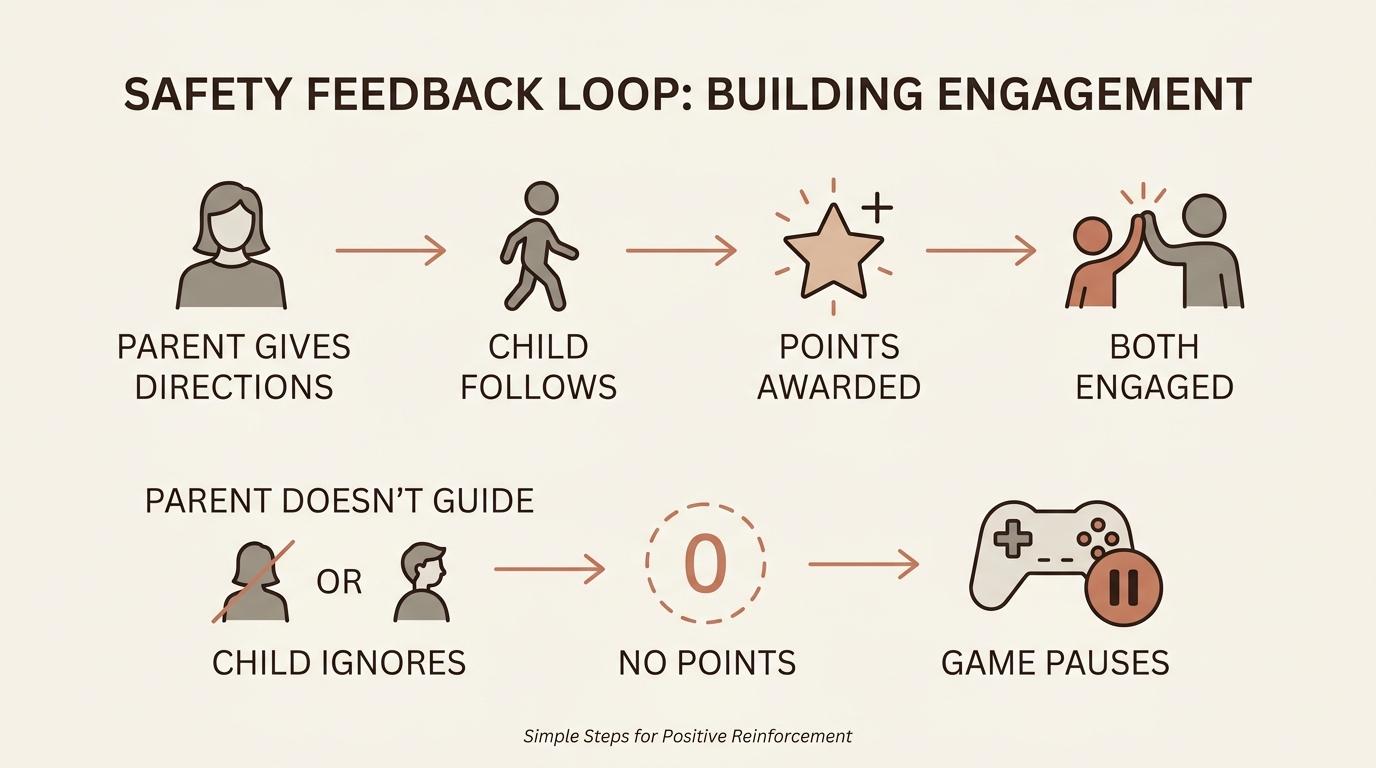
The parent acts as guide from inside the cabin. If they don't give directions, or the child doesn't follow them, no points. The safety mechanic is built into the game itself.
The parent isn't a constraint. They're a player.
One thing came up during ergonomics testing that changed everything: parents need to feel their child is safe, not just know it logically. So I structured every game so the parent always acts as guide. If they don't give directions, or the child ignores them, no points. The game pauses.
Safety isn't enforced from outside. It's the game mechanic itself.
A real Mach-E reacting in real time.
The interactive prototype runs the full Everland experience. A phone app controls the game while a 3D Mustang Mach-E reacts in real time — parking sensors glow, blinkers flash, the dashboard responds to gameplay. I built it with Three.js and custom WebGL shaders.
Ford saw it as a direction worth exploring.
I consulted with GoSpooky, an AR studio in Amsterdam, to validate the technical feasibility of the AR components. They confirmed that games using 2D targets get better retention than screen-only experiences, and that the car's physical surfaces work well as anchor points.
I also tested the parking sensor accuracy by comparing sensor detection to a physical button press — the sensor was equally accurate and had the advantage of already being built into the car, meaning no extra hardware.
The concept was presented to Ford's design team as part of the TU Delft collaboration. The feedback focused on the safety mechanic — they hadn't considered gamifying the parent-child dynamic rather than restricting it, and saw it as a direction worth exploring further.